Can You Build Glutes at Home? Why Your Lower Body Hits a Ceiling
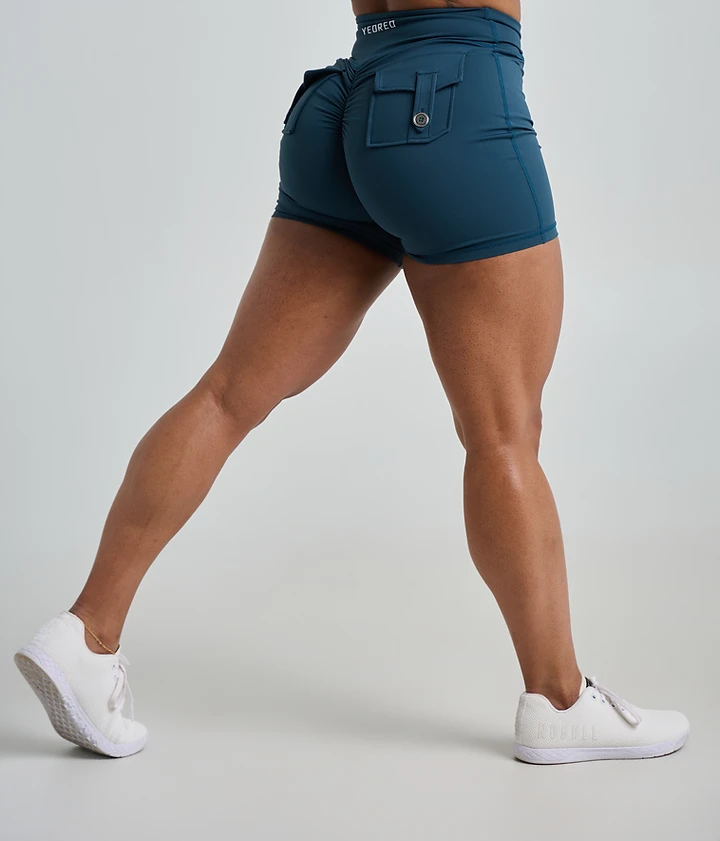
Can you build glutes at home? You can build some shape at home, and you can build a real upper body at home. But if you want full, dense glutes and thighs, a home workout with dumbbells and bands is going to stall out. That's not a motivation problem. It's a load problem.
I'm LaToya Loren Price. I'm a board certified nurse practitioner with clinical experience in obesity management, certified as a functional weight loss consultant, and NASM certified as a bodybuilding physique coach. I get asked about home workouts all the time: by women interested in my app, by my Diagnostic clients, in my email and in my YouTube comments. This post is the written version of my podcast episode on it, Your Favorite Influencer Isn't Doing Her Home Workout.
Can you build glutes at home? The short answer
Partly. At home you can get healthier, build your upper body and add some shape to your lower body. Size is where you hit a ceiling, for three reasons. 1. Programming: the women selling home programs are usually training bodybuilding splits in a gym. 2. Load: your glutes, hamstrings and quads need more weight than your hands can hold, so dumbbells run out. 3. Nutrition: the bodies you're chasing are built on tracked food, not good guesses. Past the ceiling, it's the gym and it's tracking.
Is your favorite influencer actually doing her home workout?
Usually not as her main training. On her off time, she's in the gym running bodybuilding splits built for the exact look she's selling you.
In business, the saying goes that you create the offer people are asking for, not the offer you want. A lot of women say, I want to work out at home. Period. So I'm pretty sure a lot of influencers moved to home programs because that's what women asked for. And there's appeal when less work is involved. A program that looks easy, with no gym and no tracking, sells.
I've seen the ads, from more than one influencer, and some of them I actually like. Who says you can't build your dream body at home? Then I see their gym selfies. If they do the home workouts at all, it's a complement to their main work, a time crunch, or content.
The workout isn't fake. It's just not what built her body.
Why can't you build a big lower body with dumbbells?
Because your legs outgrow your hands. Your glutes, hamstrings and quads are the largest muscles in your body, and after a certain point they need more load and tension than dumbbells and kettlebells can give them. Your lower body adapts to the dumbbell work. You may get some shape. You won't get the size.
The ceiling comes from your hands. Your upper body can only hold so much weight, and dumbbells only get so heavy. And when you're holding heavy dumbbells and kettlebells all the time, that's tension on your upper body. That's upper body training, indirectly. Your traps get involved even if you use grips, and most women don't want big traps.
There's a second problem. With dumbbells you're usually working the whole leg at once, so the load gets spread out. One muscle tires before another, other muscles come in to compensate, and you never max out the muscle you're actually trying to grow.
Can high reps with light weights grow your glutes?
They can, but it's brutal. Heavy and light weights build similar muscle when your sets are taken close to failure. That part is true. With home dumbbells, though, close to failure on your legs can mean 30 or more reps a set, and most people quit, or their upper body gives out, before they get there. So it's possible on paper. In real life, most women never reach the effort it takes.
Why does your upper body change at home and your lower body doesn't?
Your upper body only needs about 10, 20 or 25 pounds to grow and get defined, so for the most part you can do that at home. In my experience, with my clients and in my own body, the upper body also responds faster than the lower body. It just doesn't need as much.
I learned this in my own body. I did hourglass programs for a while. A lot of them are built on dumbbell work, with some barbell work for the lower body, but it's kept in check because the goal is to keep the lower body balanced with the upper body. When I moved to a bodybuilding program built for the Teardrop Hourglass™ (hips slightly wider than your shoulders, a defined waist, and a full, dense lower body), I learned I needed to stack more weight. It wasn't until I trained with more barbell, Smith machine and machine work that I saw real density in my lower body.
During COVID, when the gyms shut down, I worked out at home with kettlebells, dumbbells and workout videos. It helped maintain me. It did not build the body of my dreams. If your glutes still aren't moving, I break down the other reasons in why are my glutes not growing.
What equipment do you need to grow your glutes?
Barbells, Smith machines and machines. They're the only way to reach the load your lower body needs while protecting your upper body and your back at the same time. Your lower body needs heavier weight than your hands can carry, and those three let you load it.
When someone tells me they train in a home gym, they usually mean some dumbbells, some bands and maybe a treadmill. Unless you can set up an actual full gym at home, which most people can't, your legs are going to need the gym. And the lifts matter less than how you load them. I cover that in why squats and deadlifts alone aren't building your lower body.
Do you need to track your food to change your shape?
Yes, if you want to look a certain way. If you don't track, you will get results, but they'll stop short of the look you want. The women with the bodies you're chasing, making those grand meals on camera, are tracking every bit of it.
There was a time I was getting results and still had more body fat than I wanted. It wasn't my training and it wasn't my cardio. I wasn't precise with my nutrition. In 2019 I did my first online fitness competition, and it was the first time I tracked macros instead of just calories. My body changed. What changed was precision.
A lot of us think that if we prioritize protein, avoid carbs and eat our vegetables, we should look like our favorite influencer. That's not how it works. It's a science. Most of the women on my Diagnostic calls have never tracked, or they tracked and quit.
How should you train at home if you're not going to a gym?
Keep the work getting harder, and give yourself room to go heavier. Home training is not my area of expertise, and I don't build my programs or my coaching around it, on purpose. But this is what I tell women who train at home:
1. Progress every week. Heavier weight or more reps as you get stronger, not the same workout at the same weight every week. 2. Get adjustable dumbbells, so you have room to go heavier. 3. Split it. If you can, go to a gym just for your lower body days and keep your upper body days at home. 4. Get your protein up. About 100 grams a day is a simple place to start.
For a health goal, home works. Where home hits a wall is changing your shape.
Is the gym worth it if it feels intimidating?
Yes, because the lower body you want needs real, heavy load. Money can be a reason, I know. But some gyms are 10 or 15 dollars a month. For a lot of women the bigger thing is being intimidated: doing new exercises in front of people, being seen.
If you're working out at home, you're usually in level one, and you want a level two body. I explain the difference in level 2 fitness. So ask yourself what it is about being visible that scares you. The biggest jump from level one to level two isn't the weight. It's letting go of what other people think of you.
FAQ
So, can you build glutes at home?
You can start at home. You can build your upper body at home. But if you want to build glutes and thighs that change your shape, past a certain point it's the gym and it's tracking. A home workout gets you some progress. The limit is real, and now you know where it comes from.
If you're building a Teardrop Hourglass, there are four training mistakes that keep your lower body from growing, even in the gym. I walk through all four in my free tutorial, The 4 Training Mistakes Killing Your Teardrop Hourglass, at gettheteardropmethod.com.
LaToya L. Price, MSN, APRN, FNP-BC. Board certified nurse practitioner with clinical experience in obesity management, certified as a functional weight loss consultant, and NASM certified as a bodybuilding physique coach.
Get the Free Tutorial.
Strategy. Precision. Level 2. Delivered to your inbox.